.png)

What I Wish I'd Known at 30: Fitness Lessons from 25 Years in the Game

I spent my best years for getting strong on cardio that was never going to get me there. The stretch when the body is most ready to build, most willing, most forgiving, and I spent it in group fitness classes chasing a result that kind of training was never going to give me.
I would not undo where it led. I am proud of where I have landed, and I am genuinely lucky to have built the base that let me take on CrossFit and calisthenics in my forties at all. But luck is not the same as efficiency. Had I known at thirty what I know now, I would have got here sooner. Stronger. Lifting heavier, further down the road.
So this is the conversation I would have with the twenty-three-year-old who started it all, and the thirty-year-old who still had time to change course. Some of it she would have listened to. Most of it she would have had to learn the slow way regardless. It is worth saying out loud anyway.
The Refuge
I did not grow up needing the gym. I was one of the genetically fortunate ones, slight by default, from a family of naturally petite people, and for the first twenty-odd years of my life that felt like something I had been spared rather than something I would one day have to work at.
So when I joined my first gym at twenty-three, it was not about my body at all. I had just moved to Toronto. I knew almost no one. I needed an outlet, a reason to leave the flat, a way into a city that did not yet feel like mine. Group exercise was the obvious door in.
The classes I started with were the ones the big chains were all running at the time. Body Pump. Body Combat. Les Mills had not long arrived and was still building momentum, but it was fast becoming the de facto offering, so that is where I landed. There was a skipping-rope class too, built around choreographed jumping and hopping to music, a weighted rope on the harder days. It took some mastering. And I was hooked. Line and sinker.
Did I make the friends I had come for? Not really. But the classes gave it somewhere else to go. I have been competitive for as long as I can remember. I skated competitively as a girl, and that streak does not switch off because you have stepped off the ice. The gym simply became its new home. I was not training to get fit. I was training to get better. To beat last week. That has never quite let go.
What the gym actually was for me in those Toronto years took longer to understand. Not muscle. Certainly not how I looked. It was salvation. A refuge from a city I was quietly unhappy in, while my heart and most of my head were an ocean away in London, a place that at the time felt like a pipe dream.
I got there eventually. But not before I had learned the first of these lessons the slow way.
Chasing the Burn
I got to London at thirty. Against a fair few odds, and there were many, but I got there, and the move came with an unexpected gift. The classes I had built my Toronto life around were waiting for me. Same Les Mills timetable, same Body Pump, same Body Combat, just a different postcode. When you move countries and almost nothing is familiar, that kind of continuity is worth more than it sounds.
So I leaned in. Hard. The classes became how I learned the city, one gym at a time. A site in one neighbourhood, a different timetable in another, a new instructor to chase across town. I added Body Attack, GRIT, anything with a heartbeat. At my peak I was doing ten to twelve classes a week. Sometimes twice in a day. On weekends, sometimes three.
And I loved it. This is the part that gets lost when you only tell the cautionary version. My cardio was in tip top shape. I was fitter, in the conditioning sense, than I had ever been. The competitive streak was being fed daily, the city was opening up to me through its gym floors, and every week I could push a little harder than the last. The burn was the whole point, and I was very good at chasing it.
For a good while, that felt like winning.
The Needle Stops Moving
Then it stopped working. Not dramatically. There was no injury that benched me, no single bad day. The needle simply stopped moving. I was putting in more than I ever had, and getting less back.
This is the quietly maddening part, because every instinct you have built tells you the answer is more. More classes. More effort. More sweat. So that is what I did. And the harder I pushed, the more stubborn the lack of progress became. What had felt like momentum in my early thirties had flattened into maintenance by the middle of them, and I could not understand why, given everything I was throwing at it.
The body is more efficient than we give it credit for. Give it the same stimulus often enough and it adapts, then it stops responding. I had not hit a wall through lack of work. I had hit one through too much of the same work, repeated past the point of return.
The moment it actually landed was an ordinary one. I was in the gym in a sports bra, caught myself in the mirror, and thought, why am I still carrying this layer across my middle? It was not dramatic, nothing close to a gut, and perhaps I was being hard on myself. But that was rather the point. For all the hours, all the classes, all the years, why was that softness still there, and why did my arms have so little of the definition I had surely earned by now? The maths did not add up. I was paying in full and the body was not delivering what the effort should have bought. That was the moment the needle stopped being a number and became something I could see.
Running on Empty
What I could not see at the time was that I was depleting myself from both ends.
On one end, the training never stopped. No real recovery, no rest worth the name, just the next class. And the body keeps a tally. The injuries started to stack up, and they were not the dramatic kind. They were the slow, grinding, accumulating kind. Tendinitis that settled in and would not leave. Calves taking a relentless pounding from all the plyometric work, all that jumping and hopping, class after class. Knees that were perpetually aggravated, worn down by the same high impact repetition with no let up. I was quietly haemorrhaging money on sports therapists, massage, kinesiology tape, the whole supporting cast you end up needing when you are asking your joints to do far too much for far too long. None of it benched me outright. All of it was the body sending the same memo over and over. This is too much.
And the harder I trained without recovering, the more my body behaved like something under siege. Chronically elevated cortisol does that. It clings to fat, and it parks a good deal of it around the middle. That layer across my abs that would not shift, no matter how many classes I did, was not a willpower problem. It was a stress response. In my thirties, when how I looked still carried more weight than I would like to admit, that layer was its own small daily frustration. It turns out I was far from the only one caught in it, which is why I have since written about the mechanics of all this in more detail.
On the other end, I was barely fuelling any of it. This was the era of low fat this and low sugar that, most of it processed, none of it the thing my body actually needed. I thought eating less and moving more was simply the equation. What I did not understand is that a deep deficit stacked on top of relentless output does not make you leaner or stronger. It makes the body hold on for dear life, slow itself down, and break down the very muscle you would want to keep. You cannot build anything on an empty tank. I was running on one for years.
Too little was being built. Too much was being broken down, in the muscle I was burning through and the joints I was wearing out. I had the equation backwards the entire time.
The Door I Walked Past
I cannot put this one down to bad information, or not entirely. There was less of it about back then, and what existed kept shifting year on year. But the honest version is that I heard what I wanted to hear. I was exercising, and a great deal of it, so surely it could only be doing me good. That was the story that suited me, so that was the story I believed. When the answer already flatters you, you stop asking the question.
And while I was busy believing it, a window was quietly closing. Your twenties and early thirties are your prime building years, the stretch when muscle is most receptive and the body most willing to grow. After that the slope tilts the other way, slowly at first, then less slowly, and the work it takes to build, and simply to hold on, quietly increases. I had that window wide open. And I spent almost all of it chasing a burn that was never going to build what I actually wanted.
The bit that still catches me is that I knew the door was there. Back in London, in my thirties, I did a CrossFit foundations course. The on ramp. The exact entry point to the kind of training that would have served me for the next twenty years. And I talked myself out of it. I told myself I had heard worrying things, that it rushed people, that the injury risk was high. But underneath the excuses was something far more ordinary. The foundations work threw me straight into the technical Olympic lifting, and I was not good at it, not yet, and I did not like being bad at something. Meanwhile I was thriving in my Les Mills classes, on a streak, comfortably excellent at the thing I already knew. So I did what nearly everyone does. I retreated to where I was good and called it a decision.
That was the window, and I let it close. It was years later, by then already in my forties, that I came back and did a handful of CrossFit classes in London, edging toward the thing I had turned down. But I did not truly let it in until Barcelona, later still, when I finally stopped flinching from being a beginner and let it humble me properly.
I am not going to pretend that sits easily. It does not. If I had walked through that door for real at thirty, instead of circling back to it a decade later, I would be stronger now, lifting heavier, further down a road I love. That is just true, and softening it would be dishonest.
But I will not call those years wasted either. The engine I built has not left me. The discipline of showing up did not switch off. And the body, as it turns out, remembers more than you expect. I came to strength late. I did not come to it empty handed.
The Switch
The change, when it finally came, was not an epiphany. It was the slow accumulation of moments like that one in the mirror, until I could no longer look away. I was working as hard as anyone I knew, harder than most, and what I had to show for it did not come close to matching the effort. There was some strength there, of course there was, you cannot do what I was doing and have none. But nothing like what all those hours should have bought me. I was skinny, I had always been skinny, but lean is not the same as strong, and there was little real muscle and not much definition underneath it. The output and the input had simply stopped adding up.
So I did the thing I should have done years earlier. I asked for help. Not from a stranger with a clipboard, but from someone who had walked the path I was on. My trainer had once been an instructor at the same kind of gym, teaching the same kind of classes I was living in. Then she had flipped her own switch and gone on to compete as a bodybuilder. She was older than me, in her forties while I was in my thirties, and that mattered. She had been where I was standing, seen further down the road than I could, and come out the other side. I did not go to her for credentials. I went to her because she understood my plate, and I trusted her to change its direction.
Her advice was almost insultingly simple. Cut the cardio right back, once or twice a week at most. Put everything else into lifting. We trained together a couple of times a week, and the rest was mine to redirect. After years of treating more as the answer to everything, being told to do less of what I was good at and more of what I had been avoiding felt close to heresy. But I had run my own experiment for long enough to know how it ended. So I listened.
She also had to talk me past a fear I did not even like admitting to. That lifting heavy would make me bulky. It sounds almost quaint now, but at the time it was real, and I hear it from women constantly to this day. The irony was standing right in front of me. Here was a woman who competed as a bodybuilder, who trained for muscle far more seriously than I ever would, and she was not bulky in the way the fear imagines. She explained what I only later understood. We do not carry the testosterone that would require, building real muscle is slow even when you chase it on purpose, and what it actually gives most women is shape and definition, the very thing all that cardio had never once given me.
It did not pay off quickly. This is the part nobody wants to hear, so I will say it plainly. Strength is slow. There is no version where you pick up a barbell and the body rewards you inside a fortnight. For a while it felt like very little was happening, which when you are coming off the instant feedback of a sweat dripping cardio class is its own kind of discouraging. You have to learn to trust a process that does not announce itself.
But it was happening. Quietly, underneath. A little more weight on the bar one week, holding there, then a little more again. The first time I pulled my own bodyweight off the floor. The first time I pushed it back overhead. Tiny increments that meant nothing in isolation and everything stacked together. And then, after long enough that I could not point to the day it started, the changes I had chased for years through all that cardio simply began to arrive.
Here is the lesson it took me a decade to learn. I was doing less than I used to, and getting back more than I ever had. More had never been more. Less, pointed in the right direction, turned out to be the whole secret.
Where I Landed
I was pushing forty by the time I flipped the switch. Late, by my own reckoning. But once it turned, I never turned it back.
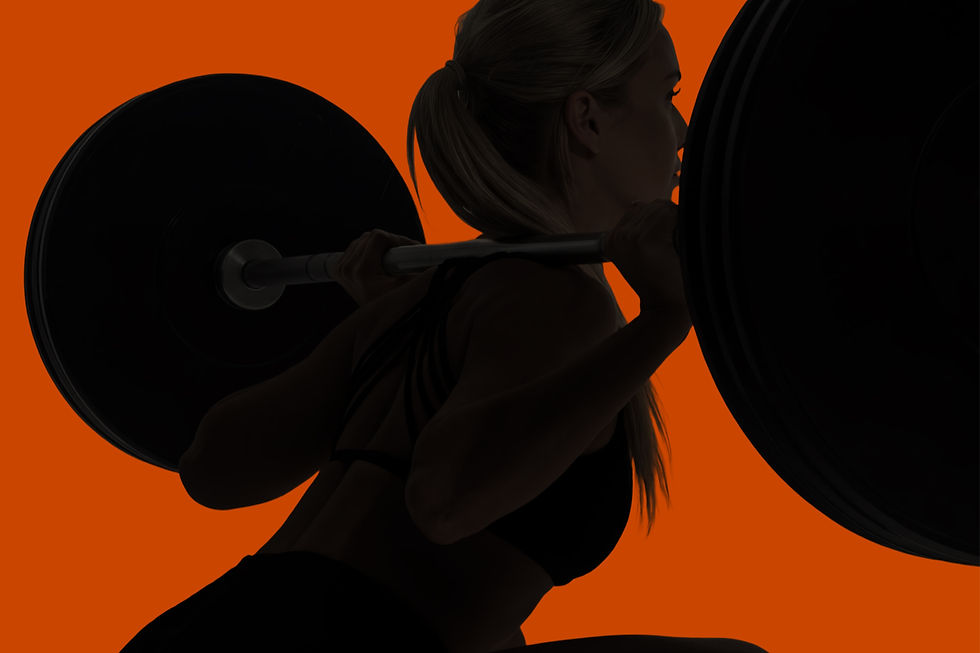
Strength became the thing I built everything else on, and the one thing I have never since deserted. The barbell work I had been so reluctant to start became the constant that outlasted every change that came after it. My deadlift and my squat have been with me longer now than any class ever was. Long-time companions, the two movements I would keep if I had to surrender all the rest.
And there was a rest, because the evolution did not stop at the barbell. In time I went back for the things I had walked past. I finally let CrossFit in, properly this time, and more recently added calisthenics, the strict, controlled, own-every-inch kind of training that suits the way my head works better than anything else I have tried. I am still a beginner at plenty of it. That is rather the point now. The same discomfort I once ran from I now go looking for on purpose, because I have learned that being bad at something new is where the growth actually lives.
Here is the part I did not see coming. I am in better shape in my forties than I was in my thirties. Stronger, without question, but also leaner and more defined than all those years of cardio ever made me, back when I was skinny and convinced that was the same as fit. It is closer to the body I was trying to build back then, and I got nearer to it by doing almost the opposite of what I had been doing to chase it.
It is not all roses, and I would not want to tell it as though it were. The injuries born of sheer punishment, the tendinitis, the battered calves, the knees I was forever taping and rehabbing, have largely gone quiet, and that still strikes me as remarkable given how much harder I train now in the ways that count. But age sends its own invoice. I recover more slowly than I used to. The soreness after a hard session lingers longer and bites harder than it did when I was twenty five. In your twenties and thirties you can pound the body relentlessly and bounce back almost out of spite. That luxury quietly expires. The work gets better and the recovery gets slower, both at once, and you learn to respect the second as much as the first.
I came to all of this late. I will not pretend otherwise, and you already know how I feel about the years it cost. But this is where it led, and I would not trade where I am standing to unfeel the regret. Both things are true at once. That is usually how it goes.
What I’d Tell Her
If I could get the twenty-three-year-old in the Toronto gym, or the thirty-year-old still chasing classes across London, to sit still long enough to listen, this is what I would tell her. Not because she would take it all on board. Most of it she would have to learn the slow way, the same as I did. But it is worth saying out loud, for her and for anyone reading who still has the time she had.
Start lifting sooner than you think you need to. Your twenties and early thirties are your prime building years, the stretch when muscle is most receptive, when it responds and grows in a way it never quite will again. The body is on the up, willing and forgiving, and that window does not stay open. You will not appreciate it until it is behind you. Do not spend it the way I did.
More is not more. There is a point where extra volume stops adding and starts taking, where the body adapts, stalls, and then quietly bills you in cortisol and injury. I learned that doing ten or twelve classes a week and going backwards. The hardest workout is not always the one that moves you forward.
Fuel the work. You cannot build anything on an empty tank, and a deep deficit piled on relentless training does the opposite of what you expect. Under stress, with cortisol running high, the body clings to fat and refuses to let it go. Worse, it starts to cannibalise the very thing you are training so hard to build. And this matters more for us, not less, because women build more slowly than men to begin with. We do not carry the testosterone that lets them add size quickly, so ours is the longer road, and starving it only makes it longer. Eat enough to build the thing you say you want.
Do not fear the barbell. Lifting heavy will not make you bulky, however stubbornly that myth persists. The kind of size women worry about takes years of deliberate, dedicated effort that does not happen by accident, and certainly not from a few heavy sessions a week. What lifting actually gives most of us is shape, definition, and a kind of lean that all those years of cardio never once handed me. The barbell is not the thing to be afraid of. Avoiding it is.
Progress is slow, and that is not a fault in you. It will not arrive overnight, and anyone selling you otherwise is selling something. The gains come in increments so small you cannot see them day to day, and then one day they are simply there. Trust the process before it shows you proof.
Recovery is not the opposite of training. It is part of it. I broke myself down for years by never letting up, and I am less injured now, training harder, because I finally learned to rest. The body builds in the recovery, not the punishment.
Let the competitive streak run, just point it well. Mine never switched off from the skating rink onward, and there is nothing wrong with that. It only became a problem when it was aimed at doing more rather than doing better. Aimed right, it is the best engine you have.
And if that streak needs somewhere to go, consider CrossFit sooner than I did. It will test every part of you and humble you on a loop, and it rewards starting while the body still has its easiest years in hand. I came to it in my forties and love it. I would have loved what I could have built starting earlier more.
Here is the one I would underline twice. You will never regret building real strength. Chase compound movements, the squat, the deadlift, the presses and pulls that ask the whole body to work at once, and keep adding load as you go. Lifting light has its place when you are finding your feet, but you cannot park at one weight and expect to change, you have to keep loading to keep progressing. The trends will come and go, the classes, the cardio, the fads. The heavy compound work is the foundation that outlasts all of it, and it is the thing everything else gets built on.
I came to most of this the long way round, and for a long time I told that story as a regret. I do not anymore. The road was longer than it needed to be, and yes, I would hand my younger self this list if I could. But it led somewhere I am proud of. I am stronger in my forties than I have ever been, and I did not get here in spite of the long way round. I got here through it. That counts for something. It might even be the whole point.